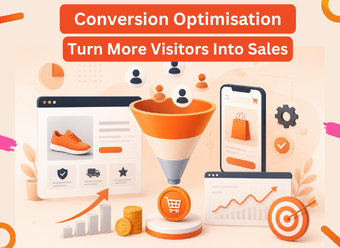
Conversion optimisation is one of the fastest ways to grow revenue without spending more on ads.
It means improving the percentage of visitors who take action on your site, whether that is buying a product, joining your email list, or booking a call.
Most of your traffic already exists. The question is how much of it you are actually converting.
This guide walks through the conversion funnel, the strategies that move the needle, and how to know if you need help from a conversion rate optimisation consultant. You will also find practical tips for improving user experience, landing page optimization, and mobile performance, with a focus on what works for eCommerce businesses in Sydney, Perth, and the Gold Coast.
What Is Conversion Rate Optimisation?
Conversion rate optimisation is the process of increasing the share of website visitors who complete a desired action. That could be a purchase, a signup, or a form submission. As part of a broader ecommerce digital marketing strategy, conversion optimisation helps businesses get more value from the traffic their marketing efforts already generate.
At its core, it is about understanding how people actually use your site. You look at real behaviour, not guesswork, and use that data to make targeted changes.
The advantage is clear. You get more value from the traffic you already have. There is no need to spend more on acquisition. Instead, you focus on converting the visitors already showing up. While conversion optimisation helps you get more value from existing visitors, ecommerce SEO helps attract qualified organic traffic that can enter your conversion funnel in the first place.
Most conversion optimisation work draws on a mix of techniques, including A/B testing, personalisation, and user experience improvements.
Key elements of conversion optimisation
- Data analysis. Look at how users actually behave on your site and where the patterns show up.
- Testing. Try different versions of a page or element to see what performs better.
- Refinement. Keep adjusting based on what the results tell you.
A conversion rate optimisation consultant can speed this process up. They bring an outside view and a structured way of testing, so you are not relying on guesswork.

Understanding the Conversion Funnel
The conversion funnel is the path a visitor takes before they buy, sign up, or take any other action you care about. It shows the stages people move through, and where they tend to drop off.
Every stage matters. A visitor can leave at any point, and each drop-off changes your overall conversion rate. Once you know where people are leaving, you know where to focus your effort.
Most funnels move through four broad stages: awareness, interest, desire, and action. Each stage needs a different kind of content or messaging to keep people moving forward.

Conversion funnel stages
- Awareness. A visitor finds your website for the first time.
- Interest. They start engaging with your content or products.
- Desire. They begin to want what you are offering.
- Action. They complete the goal, such as making a purchase.
Optimising the funnel means finding where people drop off and fixing that specific step. That is usually more effective than making broad changes across the whole site.
Once you understand how the funnel behaves, you can adjust the experience so more visitors move through to the next stage. Over time, this compounds into a meaningfully better conversion rate.
Funnel analysis works best with proper data tools behind it. Without them, you are optimising on instinct rather than evidence.
Why Conversion Rates Matter for Your Business
Your conversion rate shows how well your website persuades visitors to act. A higher rate means more customers and more revenue, without needing more traffic.
Improving conversions directly improves your return on investment. You get more value out of the same marketing spend, because more of the people who arrive actually convert, which is why businesses often combine CRO with a digital performance marketing agency.
A low conversion rate is often a signal of a deeper user experience problem. Fixing it tends to improve the whole customer journey, not just the numbers on a dashboard. If you are looking at how to boost conversion rate, start by identifying where visitors are dropping off and what may be preventing them from taking the next step.
Why conversion rates matter
- More revenue. Every extra conversion adds to your bottom line.
- Better ROI. You get more from the traffic and ad spend you already have.
- Stronger competitive position. A higher conversion rate is a real advantage over competitors chasing the same customers.
Investing in conversion optimisation also improves the experience for the people using your site. A better experience tends to bring people back, which builds long-term value beyond the first sale.
Prioritising conversion rate over vanity metrics like raw traffic sets your business up for sustainable growth, not just short bursts of activity.
How to Calculate and Benchmark Conversion Rates
The formula for conversion rate is simple:
Conversion Rate = (Number of Conversions ÷ Total Visitors) x 100
This tells you what percentage of visitors completed the action you care about, such as a purchase or a signup.
A number on its own does not mean much. You need a benchmark. Industry averages vary a lot by sector, so compare your results against businesses similar to yours, not generic averages.
Track your rate regularly rather than checking it once. A steady or improving rate usually means your strategies are working. A sudden drop is worth investigating straight away.
Steps to benchmark your conversion rate
- Look up industry averages as a starting reference point.
- Compare against similar competitors, not the market as a whole.
- Track changes over time so you can spot real trends, not noise.
Once you know where you stand, you can make informed decisions about where to invest your time and budget.
Key Conversion Optimisation Strategies
Good conversion optimisation strategies focus on specific, measurable changes rather than a full site redesign. Each one should target a clear part of the customer journey.
Start by mapping your funnel and finding where visitors drop off. That tells you where a strategy will have the most impact.
Testing is central to all of this. What works for one audience will not always work for another, so treat every change as something to measure, not assume.
Two of the most useful methods are A/B testing and personalisation. A/B testing shows you which version of a page or element performs better. Personalisation adapts content to different visitor segments, which tends to lift engagement.
Using a combination of strategies, prioritised by impact, generally works better than relying on one tactic alone.
- Design improvements. Clean up layouts and visual hierarchy.
- Content adjustments. Make your messaging clearer and easier to scan.

Conversion optimisation is not something you do once and forget. Keep an eye on new tactics and tools as they emerge, and be ready to test them against what you already have running.
A/B Testing and Experimentation
A/B testing compares two versions of a page or element to see which one performs better with real visitors.
Start with something simple, like a headline or a call-to-action button. These small elements often have an outsized effect on conversion rates. Once you see what works, apply the same thinking to other parts of the page.
Treat testing as an ongoing habit, not a one-off project. The more you test, the clearer the picture becomes of what actually drives your visitors to act.
Good elements to A/B test:
- Headlines. Try different wording and tone.
- Images. Compare different visuals and placements.
- CTA buttons. Test colour, size, and copy.

Reliable A/B testing depends on enough data to be statistically meaningful. Small sample sizes can point you in the wrong direction, so give tests enough time and traffic before drawing conclusions.
Personalisation and Segmentation
The same segmentation principles can also strengthen email marketing campaigns, allowing businesses to deliver more relevant messages based on customer behaviour, interests, and purchase history. Segmentation is how you group visitors with shared traits so that tailoring is actually practical at scale.

Start with your existing user data. Look for patterns in behaviour, such as what different groups tend to click, buy, or ignore.
Use those patterns to adjust your messaging for each segment. Even simple personalisation, like showing different content to new versus returning visitors, can noticeably lift engagement.
Steps for implementing personalisation:
- Use your existing data. Look at what you already know about visitor behaviour.
- Segment your audience. Group visitors by shared characteristics or intent.
- Deliver relevant content. Match messaging to what each segment actually cares about.
Done well, personalisation makes visitors feel like the site understands what they need, which builds trust and encourages them to convert.
Improving User Experience
User experience has a direct effect on conversion optimisation. A site that feels smooth and intuitive removes the friction that stops people from completing an action.
Start by reviewing your current site honestly. Look for the points where users hesitate, get confused, or leave. These are usually the biggest opportunities.
Key areas to improve:
- Navigation. Make it easy to find what visitors are looking for.
- Clarity. Keep information simple and easy to scan.
- Feedback. Give users clear signals when an action succeeds, like a confirmation message.

Good user experience is not just about how a site looks. It is about how easily someone can actually get what they came for.
Landing Page Optimization
Your landing page is often the first real impression a visitor gets, so it carries a lot of weight in conversion optimisation.
Keep the messaging clear and focused on one goal. Every element on the page should support that single call-to-action, not compete with it.
Design matters too, but it should support the message rather than distract from it. Balance strong visuals with clear, concise copy.

Core elements of an effective landing page:
- A clear headline that grabs attention immediately.
- Concise copy that gets to the point.
- A strong call-to-action, placed prominently and worded clearly.
There is no single template for a perfect landing page. What matters is that it lines up with your specific offer and audience.
Mobile and Page Speed Optimisation
Most visitors now browse on mobile, so a slow or clunky mobile experience is a direct hit to your conversion rate.

Page speed matters just as much. Every extra second of load time increases the chance a visitor leaves before they even see your offer.
Tips for mobile and speed:
- Use responsive design so your site adapts properly to any screen size.
- Optimise images so they load quickly without losing quality.
- Cut unnecessary scripts that slow the page down without adding value.
Improving mobile performance and page speed together tends to lift conversion rates noticeably, especially for visitors arriving from social or search on their phones.
Conversion Techniques to Boost Conversions
Beyond the core strategies, there are a handful of practical conversion techniques worth applying across your site.
Start by simplifying every process a visitor has to complete. Fewer steps in a form or checkout means fewer chances for someone to abandon it.
Keep your content presentation clear. Visitors decide fast, so direct, well-organised information helps them get to a decision sooner.
Effective techniques:
- Simplified forms. Only ask for the information you actually need.
- Accessible navigation. Make the path through your site obvious.
Social proof is another strong lever. Reviews and testimonials build credibility quickly, so display them where visitors are making decisions.
Visuals also do a lot of work. Images and short videos can explain a product or process faster than a block of text.
Visual strategies worth using:
- Quality images that are genuinely relevant to the product or message.
- Short instructional videos that walk through how something works.

None of these techniques work in isolation. Combined, they chip away at the friction that keeps visitors from converting.
Leveraging Social Proof and Trust Signals
People trust other people’s experiences more than they trust marketing copy. That is why social proof has such a strong effect on conversion optimisation.

Reviews and testimonials show real outcomes from real customers. Displaying them near your key decision points, like product pages or checkout, reinforces that the purchase is a safe choice.
Trust signals such as secure payment icons and clear guarantees add another layer of confidence. They tell a visitor your site is legitimate before they hand over any payment details.
Key social proof strategies:
- Customer reviews. Show genuine feedback, not just the highest ratings.
- Trust badges. Display recognisable security and guarantee logos.
When visitors feel confident and reassured, they are far more likely to complete the action you want. Trust is often the final thing standing between interest and a completed sale.
Using Analytics and Tools for Conversion Optimisation
You cannot improve what you cannot measure. Analytics tools give you the visibility to understand how visitors actually behave on your site.

Heatmaps show where people click, scroll, and hesitate. They make it easy to spot which parts of a page get attention and which ones get ignored.
Ongoing analytics tracking also lets you see the real impact of any change you make, rather than guessing whether something worked.
Useful analytics tools:
- Google Analytics for a full view of visitor behaviour.
- Hotjar or similar heatmap tools for visual engagement tracking.
- A/B testing platforms to run and measure experiments properly.
The right combination of tools turns raw data into decisions you can actually act on. Reviewing this regularly, rather than once a quarter, keeps your strategy grounded in what is actually happening on your site.
Working with a Conversion Optimisation Consultant or Agency
A conversion optimisation consultant brings a structured, outside perspective to your website. They look at your data without the bias that comes from being close to the business every day.
Because they work across many sites, they often spot issues you would not catch on your own. Their process is usually built around testing and data, rather than opinion.
Benefits of working with a consultant:
- Expert analysis based on experience across multiple sites and industries.
- Strategies built for your specific business, not a generic template.
- A realistic path to a higher conversion rate, backed by testing.
A good consultant or agency uses proper tools to measure what is actually happening, then applies practices that have worked elsewhere in your industry, alongside other ecommerce marketing services when needed. This usually shows up as better engagement and more completed sales over time.
Choosing the right partner matters. Look for a track record with businesses like yours, and a genuine understanding of your market rather than a one-size-fits-all pitch.
Regional Focus: Sydney, Perth, and Gold Coast
Working with a local agency has real advantages. They understand the regional market, the local customer base, and the competitive landscape you are actually operating in.
In Sydney, many agencies focus on newer testing techniques and stay close to emerging trends, which suits businesses competing in a fast-moving market.
Why local expertise helps:
- Local market understanding, built from working with similar businesses nearby.
- Cultural context that shapes how local customers respond to messaging.
- Strategies tailored to your specific region, not copied from overseas playbooks.
Perth-based agencies often work closely with niche and specialised markets, while Gold Coast teams tend to bring a more creative, attention-grabbing approach. Whichever region you are in, working with a conversion rate optimisation agency that knows your local market can meaningfully lift your results.
Common Mistakes and How to Avoid Them
Conversion optimisation goes wrong more often from rushed decisions than from bad intentions. Many businesses make changes based on a hunch, without checking whether the data actually supports it.
Ignoring mobile visitors is another common and costly mistake. With most traffic now coming from phones, a poor mobile experience directly limits how many people can convert at all.
Common mistakes to avoid:
- Skipping A/B testing and relying on assumptions instead.
- Overloading landing pages with too many competing elements.
- Neglecting mobile optimisation while focusing only on desktop.
Not testing changes properly is one of the most avoidable errors. Testing tells you what actually works, rather than what you assume will work.
Finally, working without clear goals tends to produce weak results. Set specific success metrics before you start, so you know whether a change actually moved the needle.
Case Studies: Real-World Conversion Optimisation Success
Looking at real examples shows how these strategies play out in practice. Different businesses apply different combinations of tactics, but the underlying approach is consistent: test, measure, and refine.
One eCommerce store significantly increased sales by running structured A/B tests and simplifying its checkout process. The result was a smoother path to purchase and a higher completed-order rate.
Strategies used:
- A simplified checkout flow with fewer required steps.
- Structured A/B testing across key pages.
- A better mobile experience for on-the-go shoppers.
A travel company took a different route, using personalisation to increase bookings by tailoring offers to individual visitor behaviour.
A media business improved engagement through landing page optimisation, using clearer calls-to-action and more focused content. Each of these examples used a different mix of tactics, matched to what actually suited their audience and goals.
Actionable Tips to Optimise Conversions Today
You do not need a full overhaul to start improving conversions. Begin with your analytics and find pages that get solid traffic but convert poorly. These are your best early opportunities.
Quick wins to start with:
- Make every call-to-action button clear and easy to spot.
- Check your site’s mobile experience regularly, not just once.
- Write concise, engaging headlines that get to the point fast.
Small, deliberate changes can add up quickly. A/B testing individual elements lets you see exactly what resonates with your audience.
Areas worth testing first:
- Different page layouts to see what guides visitors better.
- Button and link colours to see what draws attention.
- Form length, cutting anything that is not essential.
These small adjustments are usually quick to implement and can show measurable results within weeks.
Conclusion: Continuous Improvement for Higher Conversion Rates
Conversion optimisation is not a one-off project. It works best as an ongoing habit of tracking performance and looking for the next opportunity.
Stay aware of new trends and tools in the space. What worked for your site last year may not be as effective today, so keep testing rather than settling.
Regular experimentation is what separates businesses that keep improving from those that plateau. Measure the impact of every change, and let the results guide your next move.
Building this mindset into how you run your website, and staying open to feedback from actual users, keeps your conversion rate improving over time and supports steady, sustainable revenue growth.
Conversion Optimisation FAQ
What is the first step to improve my conversion rate?
Start with your data. Use analytics to find pages with strong traffic but weak conversion rates, and map them against the funnel stages: awareness, interest, desire, and action.
From there, run A/B tests on the biggest levers first, like headlines, calls-to-action, and forms. These conversion techniques tend to move the needle fastest, and the results help guide your later work on user experience and personalisation.
How do I know where users drop off in the conversion funnel?
Use analytics and behaviour tools together. Start with funnel reports and goal paths to see the broad picture, then use heatmaps and session recordings to see exactly where people get stuck.
Watch for high exit rates, weak clicks on your CTA, and abandoned forms. These are the clearest signals of where to focus your conversion optimisation work.
What is the difference between A/B testing and personalisation, and when should I use each?
A/B testing compares two or more versions of something to see which performs better. Use it for headlines, images, CTAs, and layout decisions.
Personalisation changes content based on who the visitor is or how they have behaved. It works best once your fundamentals are solid, helping you send more relevant messages to the right audience.
Which landing page elements usually make the biggest difference to conversions?
Clear headlines, strong CTAs, short benefit-led copy, visible trust signals, and fast mobile load times.
Lead with a clear value offer above the fold. Keep forms short, and make your main CTA easy to see and tap. Solid landing page optimization can noticeably lift your conversion rate and overall sales.
Do I need a consultant or agency if I already use analytics tools?
Tools give you data. A consultant turns that data into a clear plan.
A conversion optimisation consultant or local agency brings market insight, testing experience, and proven strategies to the table. That matters most when your team is short on time or testing expertise. If you are based in Sydney, Perth, or the Gold Coast, a local conversion rate optimisation agency can support your goals and help increase sales over time.