Search has changed. Traditional SEO once focused on ranking higher in Google with backlinks, keywords, and traffic. Today, the rise of AI search optimization has shifted the game.
Users no longer type simple queries and scan ten blue links. Instead, they ask a question and get instant answers from engines powered by AI like Google’s AI Overviews, ChatGPT, or Perplexity.
This new reality demands a new strategy: generative engine optimization.

Also called generalized engine optimization, GEO is the next stage after answer engine optimization (AEO).
While AEO was about winning featured snippets and answer boxes, GEO is about making sure AI systems pull your content, cite your brand, and deliver it as part of their responses.
In simple terms, generative engine optimization means preparing your website so AI engines can easily understand, trust, and use your content when generating answers.
This matters because visibility is moving from search results to AI-driven answers. Brands that fail to adapt risk being invisible in the next wave of digital discovery.
GEO is not just an add-on to SEO; it is the future of how people will find, evaluate, and choose businesses online.
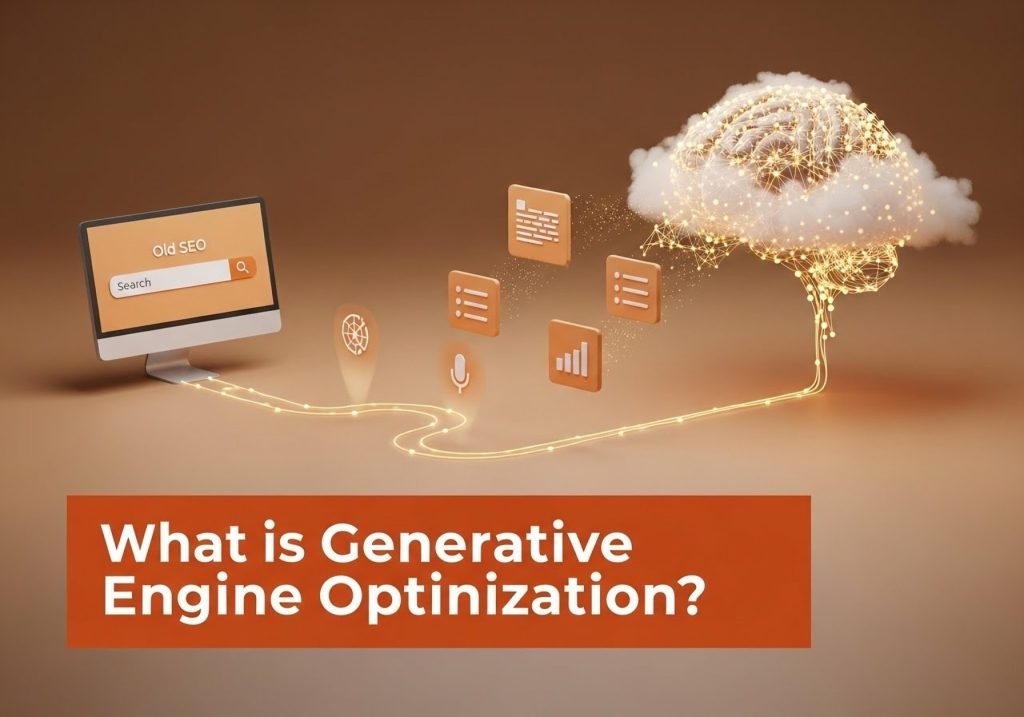
What is Generative (Generalized) Engine Optimization?
Many people ask, what is generative engine optimization? The term describes a new branch of search strategy built for AI systems.
Unlike traditional SEO, which focuses on ranking in search results, GEO is about making sure AI-driven answer engines—such as ChatGPT, Google AI Overviews, and Perplexity find, understand, and trust your content.
When these engines pull data to answer user questions, GEO ensures your brand is part of the response.
Some use the phrase generalized engine optimization. Others say generative engine optimization.
While the words differ, the meaning is almost the same. Generative highlights how AI models create answers by generating text.
Generalized stresses the broad, system-wide reach of this optimization. Both point to one goal: helping content appear in AI-powered conversations, not just in a list of links.
GEO explained in simple terms: It is the practice of structuring and presenting your website content so that conversational AI tools can easily extract and display it.
This includes clear definitions, concise answers, structured data, and credible sources.
We already see GEO at work in real-world search experiences. When you ask Google a question and the AI Overview shows a summary with source links, that is GEO in action.
When Perplexity cites a blog post in its conversational search response, or ChatGPT recommends a product and links to a site, those are direct examples of generative engine optimization delivering visibility.
In short, GEO is about more than rankings it’s about conversation-level presence.
As users move from scanning search results to trusting AI-generated answers, GEO becomes the strategy that decides which brands stay visible and relevant in this new era.
The Evolution: SEO → AEO → GEO
Search has never stood still. From the early days of keyword stuffing to today’s AI-driven results, the way people discover answers online has changed dramatically.
To understand the shift, let’s look at how SEO, AEO, and GEO connect.

Traditional SEO was built on three pillars: links, rankings, and traffic. Businesses competed for the top spots on Google by optimizing on-page content, earning backlinks, and targeting keywords.
The reward was visibility in the “10 blue links.”
Then came Answer Engine Optimization (AEO).
Instead of just competing for rankings, brands had to structure their content so search engines could extract clear answers. AEO focused on featured snippets, knowledge panels, and answer boxes places where Google directly displayed information instead of sending users to a website.
This shift forced companies to optimize not only for keywords but also for questions and concise responses.
Now we are entering the age of Generative (Generalized) Engine Optimization (GEO) the new SEO shaped by AI.
Unlike AEO, which stopped at answer boxes, GEO ensures content is cited and referenced inside AI-generated responses.
Large Language Models (LLMs) like ChatGPT, Google AI Overviews, and Perplexity don’t just list linksthey generate human-like explanations.
In this world, your visibility depends on whether the AI trusts your content enough to include it in its conversation.
Here’s a clear comparison:
| Factor | SEO | AEO | GEO |
| Focus | Keywords & backlinks | Featured snippets & answer boxes | AI answer citations & brand mentions |
| Goal | Rank higher in SERPs | Be the chosen answer | Be referenced inside AI-generated content |
| User Experience | Click-based discovery | Quick, on-page answers | Conversational, AI-driven responses |
| Success Metric | Traffic & CTR | Featured snippet ownership | AI citations, brand trust, contextual visibility |
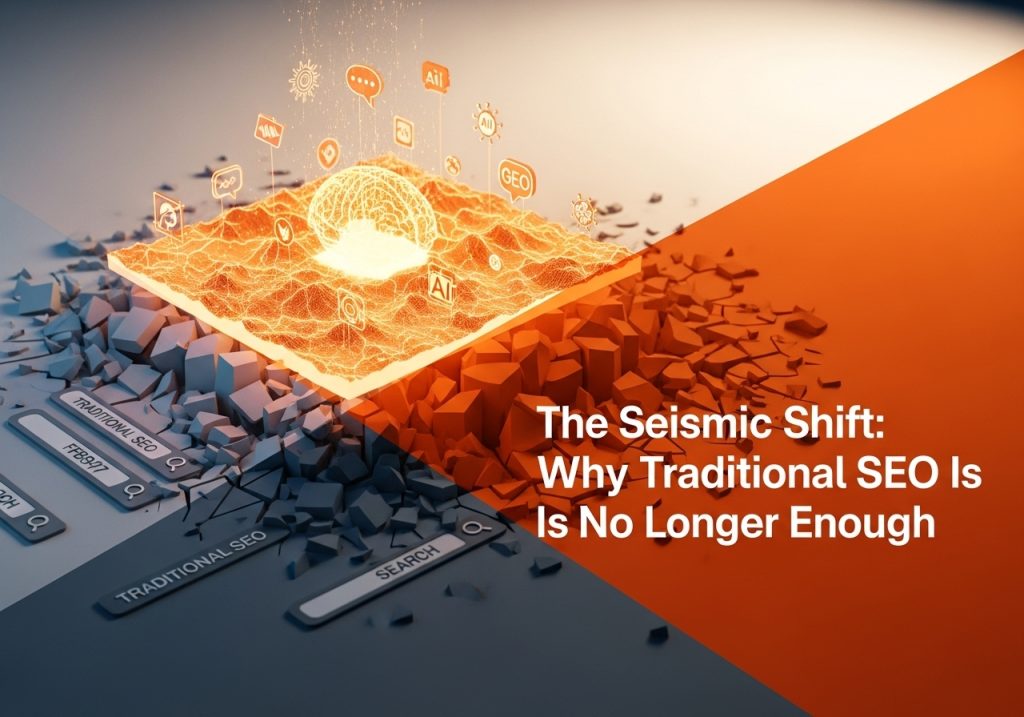
Why Traditional SEO Is No Longer Enough
For years, the rules of the game were simple: find the right keywords, build some links, and climb to the top of Google.
That strategy worked well, but a massive change is happening right under our feet. This shift is all about how generative AI is changing search.
Old methods are starting to crack because they were built for a world that is quickly fading away.
Think about the new Search Generative Experience (SGE). Instead of just seeing a list of websites, users now get an AI-crafted summary that directly answers their questions at the very top of the page.
This highlights the severe limitations of keyword ranking. What good is being the number one link when an AI answer satisfies the user before they even scroll down?
Suddenly, the old goal of just “ranking high” feels empty.
This is where we must talk about vanity metrics vs. real results. Clicks, impressions, and rankings look great in a report, but they don’t pay the bills if they don’t lead to sales.
In an AI-powered world, the real result isn’t a click it’s becoming the trusted source that feeds the AI its information.
If your content is the foundation for that generated answer, you’ve achieved true authority.
Furthermore, the idea of optimizing for one search engine is becoming obsolete.
Your customers are asking questions everywhere. They might use voice search on their smart speaker, type a query into TikTok, or ask a chatbot for recommendations.
This requires a strategy that goes far beyond Google optimization.
Focusing all your energy on one platform is like fishing in a single spot while your customers are gathering all over the lake. The game has changed, and our strategy must evolve with it.
How AI Engines Choose Sources
The rules of visibility are changing. In the world of AI search optimization, success depends on how engines like ChatGPT, Google AI Overviews, Microsoft Copilot, and Perplexity select their sources.
These systems no longer scan only rankings—they evaluate authority, freshness, structured data, and topical relevance to decide which content to cite.

AI engines look for concise, evidence-based, and well-structured answers.
Unlike traditional SEO, where a long article could rank by covering multiple keywords, LLMs (Large Language Models) prefer content that gets straight to the point while providing credible context.
A short, clear definition supported by references is more likely to earn a ChatGPT citation than a vague, lengthy explanation.
Authority remains critical. Well-established brands, high-authority domains, and recognized experts are trusted more by AI systems.
Freshness also matters, since outdated information reduces credibility in fast-changing industries.
Structured data such as schema markup, bullet points, and clear headings helps engines parse and reuse content in their generated answers.
Consider zero-click answers. Just as Google shifted traffic away from websites with featured snippets, AI-driven platforms deliver answers without requiring users to click at all.
In this environment, visibility comes from being the cited source inside the response. For example, Perplexity often highlights brands that consistently provide precise, well-organized insights.
This explains why some companies show up again and again in AI-generated results.
They publish clear, trustworthy, and up-to-date content that LLMs can easily extract. In other words, they practice LLM citation SEO—optimizing not just for humans and search engines, but also for conversational AI.
The takeaway: if your content isn’t structured for AI to trust and cite, your brand risks becoming invisible in the next era of search.
GEO Content Strategies- How to Optimize for AI Answers
If SEO was about ranking and AEO was about snippets, then GEO is about learning how to optimize for AI answers.

AI systems like Google AI Overviews, ChatGPT, and Perplexity don’t just pull from a single headline, they pull structured knowledge, clear responses, and credible sources.
To win in this new space, your content needs a GEO strategy that fits the way AI reads and cites information.
1. Format Matters
AI prefers content that is easy to extract. Formats like FAQs, how-to guides, step-by-step processes, and statistical breakdowns perform well.
For example, a page that starts with a short “what is” answer followed by detailed explanations is perfect for conversational search optimization.
This structure matches the way users ask questions and the way AI engines reply.
2. Entity SEO for Authority
Consistency builds trust. When your brand name, products, and team appear regularly across your site and external sources, you strengthen entity SEO. AI engines identify these patterns and are more likely to feature brands that appear as recognized entities. This makes your business part of the knowledge graph that fuels GEO visibility.
3. Schema Markup for AI Extraction
Adding structured data is no longer optional. Use schema types such as:
- FAQPage for question-based content
- HowTo for step-by-step tutorials
- Product for eCommerce pages
- Organization JSON-LD for brand authority
By using schema for AI answers, you help engines read and reuse your content correctly.
4. Short Answers First, Depth Second
AI loves clarity. Always lead with a concise, one-sentence definition or solution before diving into detail.
For example, start with “Generative Engine Optimization is optimizing content for AI-driven search systems” before explaining the methods.
This structure boosts your chances of earning ChatGPT citations or appearing in AI Overviews.
5. Use Data and Outbound Citations
Just as human readers trust sources with evidence, AI systems reward content backed by data and outbound citations.
Linking to government reports, industry studies, or authoritative organizations signals credibility.
This small step improves your chances of inclusion in zero-click AI summaries.
6. Apply GEO to All Content Types
- Blogs: Use FAQs, definitions, and internal links for contextual authority.
- Product Pages: Add structured data and comparison tables.
- Case Studies: Highlight numbers, results, and citations to trusted third-party tools.
In short, GEO strategy is about designing content for AI-friendly formats, structured signals, and credible context.
Businesses that adapt now will not just rank—they’ll own space inside AI answers across Google, Microsoft, and beyond.
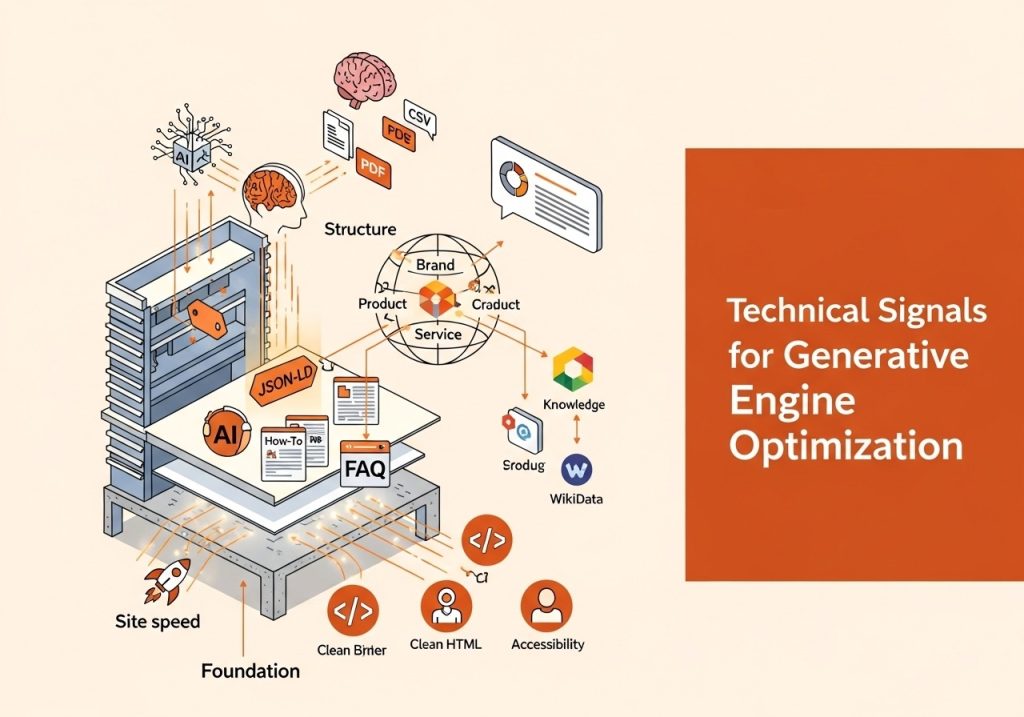
Technical Signals for Generative Engine Optimization
In generative engine optimization (GEO), technical setup is just as important as content. AI engines need clear, structured, and accessible data to trust and cite your website.
Without the right technical signals, even the best content might go unnoticed.
1. Core Technical Foundations
Start with the basics. Site speed, clean HTML, and accessibility are critical. Slow-loading pages or broken code reduce your chances of being cited in AI answers.
A clear, organized structure helps crawlability for AI, meaning that AI models can easily scan and understand your content.
2. Schema Markup and Metadata
Adding schema markup for AI is essential. Use JSON-LD for GEO to label content like FAQs, HowTo guides, products, and organization details.
This structured data gives AI engines explicit instructions about your content type, making it easier to extract answers.
Proper metadata, such as titles, descriptions, and author info, improves your AI readiness and boosts trust signals.
3. Knowledge Graph and Entity Connections
AI engines rely heavily on knowledge graphs to understand relationships between entities.
Connect your brand, products, and services across authoritative platforms like Google Knowledge Graph, Wikidata, and SameAs links.
Consistent entity mentions help AI recognize your authority and improve the likelihood of being cited.
4. Crawlable Data and RAG-Friendly Assets
AI systems also use structured data for retrieval-augmented generation (RAG). Providing crawlable datasets, PDFs, CSV files, and technical documentation gives AI engines high-quality information to generate answers.
Well-structured resources can make your brand a preferred reference in AI responses.
Closing Remarks
Technical signals are the backbone of GEO success. By combining fast, accessible websites, proper JSON-LD schema, knowledge graph optimization, and crawlable data assets, your content becomes AI-friendly.
In today’s world, technical readiness is not optional, it determines whether your content will be trusted, cited, and featured in AI-generated answers.
Measuring GEO Success & AI Visibility
Tracking performance is key in generative engine optimization (GEO).
Unlike traditional SEO, GEO focuses on AI citations and conversational presence rather than just rankings or clicks.
Knowing how to measure AI citation visibility ensures your efforts translate into real impact.
Key Performance Indicators (KPIs) for GEO

- AI Citation Tracking – Monitor which AI engines, like ChatGPT or Google AI Overviews, reference your content. This shows which pages are trusted and actively used in AI responses.
- Brand Mention Share – Measure how often your brand or products appear compared to competitors in AI-generated answers. High share signals authority.
- Generative Impressions (Zero-Click Exposure) – Count how often AI delivers your content without requiring a click. This metric reflects visibility in AI-driven environments.
Tools and Methods
Emerging AI tracking tools allow you to monitor citations, extract inclusion rates, and analyze conversational performance.
Integrating these with dashboards gives a clear picture of your AI visibility tracking.
Tying GEO to Revenue
GEO success is not just about citations; it impacts conversions.
Pages that earn AI citations often see increased traffic, higher engagement, and improved trust.
By mapping AI inclusion to conversion data, you can link GEO KPIs directly to revenue goals, proving the ROI of your AI-focused strategy. We cover exactly how to build that mapping including the formulas and a readiness framework for teams without a full analytics stack in our guide to AI Visibility ROI.
In short, measuring AI visibility is essential for understanding which content resonates with AI engines and which pages drive value for your business.
Tracking these KPIs ensures your GEO strategy is both effective and measurable.
GEO for Ecommerce & B2B Brands
Generative engine optimization (GEO) is not just a theory, it has real impact for ecommerce and B2B brands.
For online stores, a strong GEO strategy for ecommerce can boost visibility in AI answers and drive sales. Product pages benefit most when you add schema for products, reviews, pricing, and FAQs.
Clear, structured content allows AI engines to extract information quickly, improving the chances of appearing in zero-click answers.

For B2B brands, GEO focuses on providing detailed, solution-oriented content. Solution pages, integration FAQs, and case studies are highly effective.
Decision-makers often use AI tools to find precise answers before contacting vendors.
Optimizing content for these queries ensures your brand is visible when it matters most.
Consider a mini-case example: A B2B software company wants to appear in Google AI Overviews. They create a page with short answers about their platform’s features, use FAQ schema for common integration questions, and add a case study with results and metrics.
As a result, AI engines cite their content in summaries, giving them visibility to potential buyers before the first call or email.
In short, GEO helps both ecommerce and B2B brands be found in AI-driven searches, guide buyer decisions, and establish authority. By structuring content for AI extraction, brands can capture attention, build trust, and convert users who rely on conversational search engines.
Final Thoughts
GEO: The New SEO
Generative engine optimization is not just an update to traditional SEO—it is the new SEO. As AI continues to change how people search and get answers, GEO ensures your content is understood, trusted, and cited by AI engines like ChatGPT and Google AI Overviews.
Brands that adopt GEO early gain visibility, authority, and a competitive edge in the AI-driven search landscape.
From AEO to GEO
GEO builds naturally on Answer Engine Optimization (AEO). While AEO focused on appearing in featured snippets and answer boxes, GEO takes it further by preparing your content for AI systems that deliver instant, conversational answers.
Take Action with Custom GEO Strategy
Ready to lead in the future of search? Partner with CustomLiftBD to create a custom GEO strategy designed to maximize AI visibility, boost citations, and grow your business. Request your custom growth plan today and stay ahead in the AI-powered world.